

Nam Jim Jaew: The Bold Tamarind Thai Dressing Recipe
Nam Jim Jaew: The Bold Tamarind Thai Dressing

Chef’s Notes
There is a distinct moment in every cook’s journey when they realise that mastering sauces is the true secret to elevating a meal. This Nam Jim Jaew recipe is one of those foundational pillars. A classic Thai dipping sauce and dressing, it skips the fleeting brightness of fresh citrus in favour of the deep, syrupy, and dried-fruit acidity of tamarind paste. When balanced with sharp rice wine vinegar and umami-heavy fish sauce, it creates a glaze that is incredibly bold. My kids absolutely love this recipe; it is full of flavour and dangerously moreish. To make it a bit friendlier for them, I will often opt for a more floral chilli profile by mixing 10g of gochujang with 5g of chilli crisp instead of raw birdseye. It is ideal as a heavy dressing for a standalone wombok (Napa cabbage) salad, topped with thinly sliced pork or beef, and it works brilliantly folded into a wrap for a quick lunch.
The Culinary Context & History:
When we look at the mechanics of Southeast Asian cuisine, the balancing act of hot, sour, salty, and sweet is paramount. Nam Jim Jaew hails from the Isan region of Northeastern Thailand, an area renowned for its robust, highly seasoned, and often fiery dishes. Unlike the seafood-focused coastal areas that rely heavily on lime juice, Isan cooking frequently utilizes tamarind to provide a deeper, more robust sourness that can stand up to heavily charred, fatty meats.
Traditionally, this sauce is the non-negotiable companion to Gai Yang (grilled chicken) or Moo Yang (grilled pork). It is a sauce designed to cut through rich, rendered animal fats. The inclusion of roasted glutinous rice powder (Khao Khua) in traditional preparations was a stroke of textural genius, providing a nutty crunch that contrasts with the syrupy liquid.
Other Foodie Suggestions:
- Pair this dressing with our heavily caramelised Sticky Asian BBQ Pork Rolls for a masterclass in balancing sweet, fatty meats with sharp acidity.
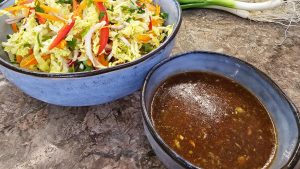
- Serve it alongside The Ultimate Asian Slaw to see how well it coats tough, crunchy vegetables.
Tasting Notes:
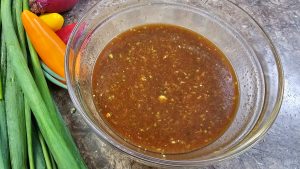
- Appearance: A deep, glossy mahogany syrup, speckled with vibrant green coriander stems and red chilli flakes.
- Aroma: Intensely savoury and earthy. The fermented tang of fish sauce hits first, followed by the warm, pungent smell of raw garlic and sweet tamarind.
- Texture: Noticeably thicker than a standard vinaigrette. The tamarind solids give it a syrupy cling, while the minced aromatics provide tiny bursts of crunch.
- Flavour: A heavy, rolling acidity from the tamarind and vinegar, anchored by the salty depth of the fish sauce, with a sweet molasses backbone from the brown sugar.
- Mouthfeel: Mouth-watering and coating. It leaves a lingering, warm tingle from the chilli and ginger that begs for another bite.
Tips, Variations & Troubleshooting:
🔥 THE FACTS: Tamarind Viscosity: Tamarind paste (or concentrate) is effectively a fruit puree that has been reduced. It contains natural pectin. This is why the dressing feels so thick and syrupy compared to one made with pure lemon juice. The pectin acts as a natural stabiliser, helping the dressing cling heavily to whatever it touches.
- The Resting Period: Do not skip the 20-minute bloom time. When you introduce dried fruit concentrates (tamarind) to fresh, sharp aromatics (garlic, ginger) and salt (fish sauce), osmotic pressure begins to pull the moisture and oils out of the fresh ingredients, marrying the flavours into a cohesive sauce rather than just a bowl of distinct, jarring liquids.
- The Pork Marinade Trick: If you are cooking steaks or pork belly, pour half of the dressing over the meat while it is resting on the board. The residual heat from the meat will gently cook the raw garlic and ginger, mellowing their harsh bite, while the acids begin to break down the surface fats.
Variations (Native Aussie Twist):
- For a brilliant bush-tucker twist, replace the standard ginger with 15g of finely grated Native Ginger. You can also add a pinch of dried, ground Pepperberry in place of the birdseye chilli to introduce a unique, lingering fruity heat.
Troubleshooting
a “Tinny” Sauce:
- Tamarind concentrates vary wildly in their acidity depending on the brand and how it was processed. Taste your base before adding the aromatics. If it tastes aggressively sharp or “tinny,” it means the acid is out of balance. Simply whisk in an additional 5g of brown sugar until it rounds out on the palate.

Common Q&A:
Can I use tamarind puree instead of paste/concentrate?
Yes, but puree is generally thinner and less intense than a concentrate. You may need to use up to double the amount of puree and omit the 10ml of warm water to achieve the right viscosity and flavour punch.
How long does Nam Jim Jaew last in the fridge?
Stored in a sterilized, airtight glass jar, this dressing will keep brilliantly for up to 5 days. The acidity and salt act as natural preservatives. Just give it a vigorous shake before using, as the tamarind solids will settle.
I don’t have coriander roots, what can I use?
The roots hold the most intense, earthy flavour. If you cannot find them, use the thickest, lowest parts of the coriander stems closest to the base, finely chopped. Do not just use the delicate upper leaves, as they will turn to mush and lack the necessary aromatic punch.
Is this dressing Gluten-Free?
Yes, provided you check the label on your specific brand of fish sauce and rice wine vinegar, the core ingredients are naturally gluten-free. (Note: If using the Gochujang hack, you must verify the Gochujang, as many traditional brands contain wheat).
Why do I need to add warm water?
Some commercial tamarind concentrates are incredibly dense, almost like tar. The 10ml of warm water simply helps lower the viscosity so the sugar can dissolve and the aromatics can disperse evenly. If your paste is already quite loose, you can skip the water.
The Recipe
Nam Jim Jaew (Tamarind & Rice Vinegar Dressing)
This version of the classic Thai dipping sauce is a masterclass in balancing heavy acidity with rich umami. It is thick, syrupy, and built to cut through fatty meats and coat robust salads.
Ingredients
The Base:
- 30g Tamarind paste (smooth concentrate)
- 30g Rice wine vinegar
- 60g Fish sauce
- 45g Brown sugar, tightly packed
- 10ml Warm water (if needed to loosen paste)
The Aromatics:
- 15g Garlic, finely minced
- 20g Ginger, finely grated
- 15g Coriander (Cilantro) roots and stems, washed and finely chopped
- 5g Birdseye chilli, finely chopped
- 10g Sesame oil
Instructions:
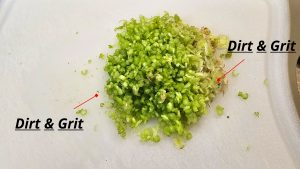
- Prep the Coriander: Finely cut your 15g coriander roots and stems. To ensure absolutely no sand or grit makes it into your dressing, place the cut coriander into a small bowl or cup of water and mix vigorously to completely loosen any trapped dirt. Drain thoroughly through a fine-mesh sieve.
If using the 30g tamarind paste, begin by mixing it with the 10ml warm water in a small bowl or jug to loosen the consistency into a smooth, workable syrup. - Smash the Aromatics: Using a mortar and pestle—or the end of a rolling pin in a heavy glass bowl—smash the clean, finely cut coriander into the 15g finely minced garlic and 20g finely grated ginger to form an aromatic paste.
- Incorporate the Sugar: Add the 45g tightly packed brown sugar directly into the smashed aromatics. Continue to pound and crush the mixture further until the sugar begins to break down and blend with the fresh oils.
- Combine and Emulsify: Add the loosened tamarind mixture, 30g rice wine vinegar, 60g fish sauce, 5g finely chopped birdseye chilli, and 10g sesame oil into the mortar or bowl. Whisk, mix, or lightly pound until the dressing is completely smooth, dissolving the remaining sugar and emulsifying the sesame oil with the acidic liquids.
- Bloom and Rest: Do not serve immediately. Allow the dressing to sit undisturbed on the bench for at least 20 minutes. This crucial resting period allows the dried, concentrated notes of the tamarind to hydrate and meld with the sharp, fresh oils released by the ginger and garlic.

Nam Jim Jaew (Tamarind & Rice Vinegar Dressing)
Ingredients
Equipment
Method
- [Prep] Finely cut the 15 g Coriander roots and stems. Submerge the cut pieces in a small bowl of water, mixing well to completely loosen any trapped dirt and grit, then drain through a fine-mesh sieve.In a small bowl, combine the 30 g Tamarind paste with the 10 ml Warm water, mixing until it forms a loose, smooth syrup.
- [Smash] Using a mortar and pestle (or the end of a rolling pin in a sturdy glass bowl), smash the cleaned coriander into the 15 g Garlic and 20 g Ginger to form a paste.

- [Incorporate] Add the 45 g Brown sugar to the smashed aromatics and crush further until well incorporated and the sugar begins to break down.

- [Combine] Pour the loosened 30 g Tamarind paste, 30 g Rice wine vinegar, 60 g Fish sauce, 5 g Birdseye chilli, and 10 g Sesame oil into the mixture. Whisk or mix thoroughly until the dressing is completely smooth and the fat emulsifies.
- [Bloom] Allow the dressing to sit at room temperature for 20 minutes before use, allowing the dried tamarind notes to meld with the fresh ginger and garlic.


Nutrition
Notes
Tried this recipe?
Let us know how it was!Subscribe for Updates!
Subscribe to be the first to learn about a new recipe

Hi, I’m Dael!
I create easy-to-follow recipes for busy home cooks. My goal is to demystify the kitchen and help you eat well every day.


