


Easy Homemade Basil Pesto (with Confit Garlic)
There is nothing quite like the vibrant colour and aromatic punch of Homemade Basil Pesto. This classic sauce from Liguria is the taste of summer, but my version has a few simple flavour boosters to make it richer, smoother, and completely foolproof.
By using roasted pine nuts, we add a deep, nutty flavour. And the real secret? Using confit garlic instead of raw. This gives you all the sweet, complex garlic flavour you love, with none of the harsh, spicy “bite”. Combined with a super-fast “all-at-once” oil method, this recipe gives you a perfectly creamy, emulsified, and stunningly green pesto in under 5 minutes.
Don’t have a food processor? No problem. This pesto works beautifully in a blender, immersion blender, or with a traditional mortar and pestle. We’ll also cover pro-tips—like blanching the basil, adding a few spinach leaves, or using ascorbic acid—to get that vibrant green to last even longer. This is your ultimate guide to the perfect pesto!
Tasting Notes
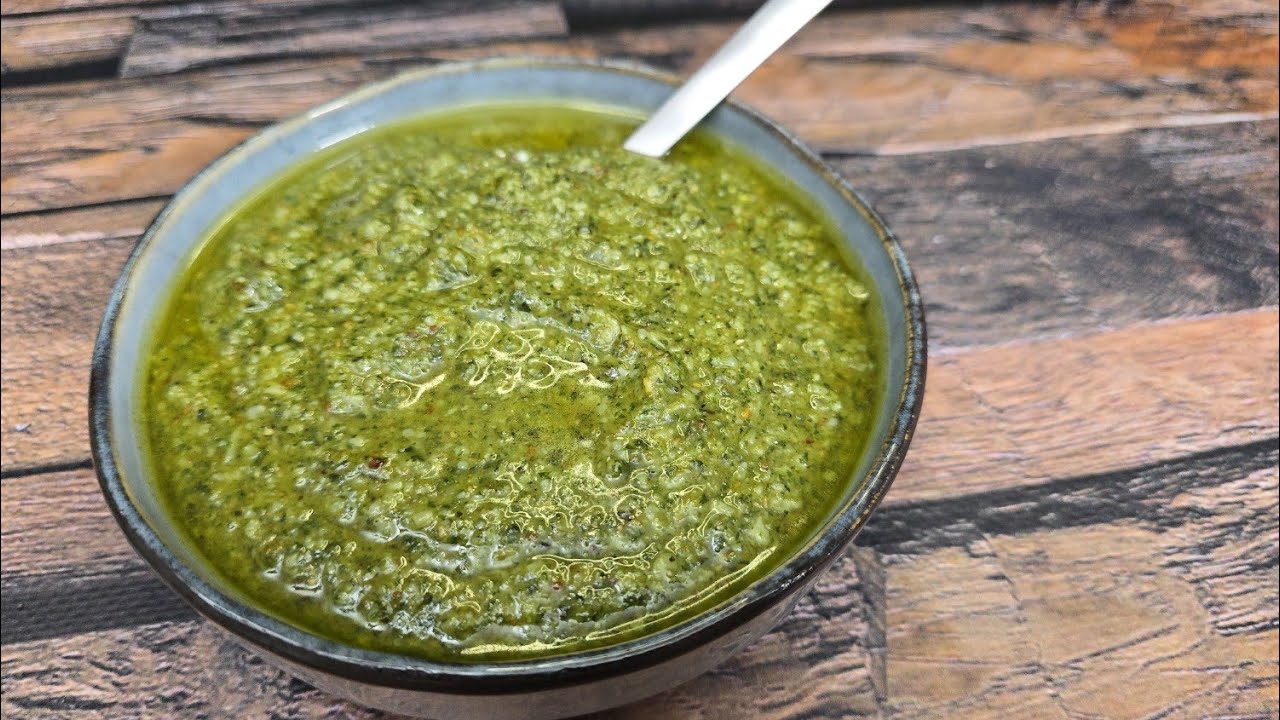
Appearance: A thick, rich, and vibrant green emulsion. The colour is bright and uniform, studded with finely incorporated particles of basil, nuts, and cheese.
Aroma: Intensely aromatic and fresh. The first note is the powerful, peppery, and sweet scent of fresh basil, followed by the rich, warm fragrance of roasted pine nuts. The Parmesan and Pecorino add a sharp, salty aroma, while the confit garlic provides a sweet, mellow background note instead of a pungent one.
Texture: Velvety, smooth, and creamy. The “all-at-once” oil method creates a stable, thick emulsion that coats the palate, with a slight, pleasant graininess from the nuts and cheese.
Flavour: A perfect harmony of flavours. It leads with fresh, green basil, followed by the rich, buttery taste of the nuts and olive oil. The cheeses provide a sharp, salty, umami kick, and the confit garlic rounds everything out with a gentle, savoury sweetness that lingers.
Tips, Flavour Hacks, and Troubleshooting
Tips
Use Confit Garlic: This is my number one hack. Simmering garlic cloves gently in oil (to make confit) transforms them. They become soft, sweet, and spreadable, allowing you to add deep garlic flavour without any of the raw, spicy “bite” that can sometimes overwhelm a pesto.
Roast Your Nuts: Don’t just toast them—roasting the pine nuts (or any nut) in the oven until golden brown adds an incredible depth of flavour that you can’t get from raw.
Use Soft Stalks: Don’t waste the younger, softer basil stalks. They are tender and packed with flavour. Add them to the food processor along with the leaves.
Don’t Over-Process: Once you add the cheese, pulse just 2-3 times. Over-processing can heat the cheese and basil, which can make the cheese clump and the basil turn a dull, dark colour.
Flavour Hacks
Peppery Kick: For a change, replace half of the basil with fresh rocket (arugula). This creates a “Pesto alla Rucola” with a wonderful peppery sharpness.
Nut Swaps: Pine nuts are classic but expensive. This pesto is just as delicious made with roasted walnuts, almonds, or even cashews for an extra creamy texture.
Red Pesto: For a “Pesto Rosso,” replace half the basil with sun-dried tomatoes (oil-packed and drained) and use roasted almonds instead of pine nuts.
Troubleshooting
Why did my pesto turn dark/brown? This is oxidation, which happens when the cut basil is exposed to air. To prevent this, work quickly, and if storing, always top the pesto with a thin layer of olive oil to create an air barrier.
Why does my pesto taste bitter? This can have two causes: 1) Your olive oil is old or “strong” in flavour. Use a good quality, mild, or “buttery” Extra Virgin Olive Oil. 2) You over-processed the oil, which can “bruise” it and release bitter-tasting polyphenols. This is why the quick, all-at-once blitz is so effective.
My pesto is too thick/thin: This is an easy fix! If it’s too thick, simply whisk in more olive oil by hand, one teaspoon at a time. If it’s too thin, you can pulse in a little more cheese or nuts.
Pro-Tips for Peak Flavour & Vibrant Colour
While this recipe is delicious as-is, there are several professional techniques you can use to customise your pesto or solve common problems like browning.
For the Brightest, Longest-Lasting Green (The Blanching Method): The biggest challenge with pesto is oxidation—the browning that happens when the cut basil hits the air. To combat this, you can blanch your basil leaves. Drop them into boiling water for just 5-10 seconds (no longer!) and then immediately plunge them into an ice-water bath to stop the cooking. Squeeze them out thoroughly and pat them very dry before adding to the food processor. This technique sets the chlorophyll, resulting in a stunningly bright, stable green that lasts for days.
For a Deeper, Richer Green: If your basil is a little pale, or you simply want a deep, forest-green pesto, add a small handful of fresh baby spinach along with the basil. Spinach is packed with chlorophyll and has a very mild flavour, so it will deepen the colour significantly without overpowering the star ingredient.
The Food Science Solution (Ascorbic Acid): To chemically stop oxidation, you can add a tiny pinch of ascorbic acid (Vitamin C powder). This powerful antioxidant neutralises the browning process before it can start. You only need the smallest amount—less than 1/8th of a teaspoon.
No Food Processor? No Problem. This pesto is incredibly versatile and doesn’t require a specific machine.
- Blender or Immersion Blender: These work beautifully and will often produce an even smoother, creamier, and more emulsified pesto due to their high speed. An immersion (stick) blender in a tall cup is fantastic for this.
- Mortar & Pestle: This is the traditional Genovese method and, while it’s a labour of love, it creates a texture that machines can’t replicate. Pounding the ingredients (starting with garlic and salt, then nuts, then basil) coaxes out the oils and flavours differently, resulting in a rustic and truly aromatic sauce.
Common Q&A
Q: How do I store homemade pesto?
A: In an airtight container in the fridge with a thin layer of olive oil on top to prevent browning. It will last for about 5-7 days.
Q: Can I freeze homemade pesto?
A: Yes! This is the best way to preserve it. Spoon the pesto into an ice cube tray, freeze until solid, then pop the cubes into a freezer bag. They’ll last for 6 months. It’s the perfect single-serving for a quick pasta dinner.
Q: Do I have to use a food processor?
A: A food processor is easiest. A blender (like a Nutribullet) also works well, but may result in a smoother, less textured pesto. The traditional method is with a mortar and pestle, which creates a fantastic texture but takes much more work.
Q: Do I really need to use confit garlic?
A: You can use raw garlic, but it will have a much sharper, spicier flavour. If using raw, I’d recommend starting with just one small clove, as it can easily take over. The confit garlic is the secret to a more balanced, rich sauce.
The Recipe
Equipment List:
- Small Food Processor
- Silicone Spatula
- Airtight container or jar

Easy Homemade Basil Pesto (with Confit Garlic)
A vibrant, aromatic sauce from Liguria, Italy, that comes together quickly using a food processor and a few simple flavour hacks for a richer, smoother taste.
Prep Time: 5 minutes
Yields: Approx. 3/4 cup
Ingredients:
- 60g (approx. 2 cups) Fresh basil leaves & soft stalks
- 30g (approx. 2 Tbsp) Pine nuts, roasted
- 10g (approx. 2 medium cloves) Confit garlic cloves
- 40g Parmesan cheese, finely grated
- 15g Pecorino Romano cheese, finely grated (optional)
- 125ml (1/2 cup) Extra Virgin Olive Oil
- 1/2 tsp Fine sea salt
- 1/4 tsp Freshly ground black pepper
Instructions:

Prep Nuts and Garlic
In the bowl of a small food processor, add your roasted pine nuts and soft confit garlic cloves. Give them a quick blitz (3-4 pulses) until they are roughly chopped.
Add Basil
Add all the fresh basil leaves (and any young, soft stalks), the salt, and the pepper. Pulse 5-6 times more, until the basil is coarsely chopped. Scrape down the sides of the bowl with a spatula.


Add Oil & Blitz
Pour all 125ml of the Extra Virgin Olive Oil into the processor at once. Secure the lid and blitz on low speed for 10-15 seconds, or until the pesto is emulsified, creamy, and smooth, but still has a little texture.
Add Cheese
Turn the food processor off. Add the finely grated Parmesan and the optional Pecorino cheese.


Final Pulse
Secure the lid and pulse just 2-3 times. Be careful not to over-process; you just want the cheese to be combined.
Adjust and Serve
Taste the pesto. Adjust with more salt or pepper if you like. It’s now ready to be served! If storing, transfer it to an airtight container and pour a thin layer of olive oil over the surface.


Easy Homemade Basil Pesto (with Confit Garlic)
Ingredients
Equipment
Method
- In a food processor, pulse roasted pine nuts and confit garlic until roughly chopped.

- Add basil, salt, and pepper. Pulse until basil is coarsely chopped. Scrape down the bowl.

- Add all the olive oil at once. Blitz on low until smooth and emulsified.

- Turn off the motor. Add Parmesan and Pecorino.

- Pulse 2-3 times, just until cheese is incorporated. Do not over-mix.

- Taste and adjust seasoning. Store in an airtight container in the fridge, topped with a thin layer of olive oil.


Nutrition
Video
Notes
Tried this recipe?
Let us know how it was!Subscribe for Updates!
Subscribe to be the first to learn about a new recipe

Hi, I’m Dael!
I create easy-to-follow recipes for busy home cooks. My goal is to demystify the kitchen and help you eat well every day.


Delicious and the kids loved it!